显示标签为“oil painting”的博文。显示所有博文

2013年7月8日星期一

The Main Subject of Claude Monet's Later Works

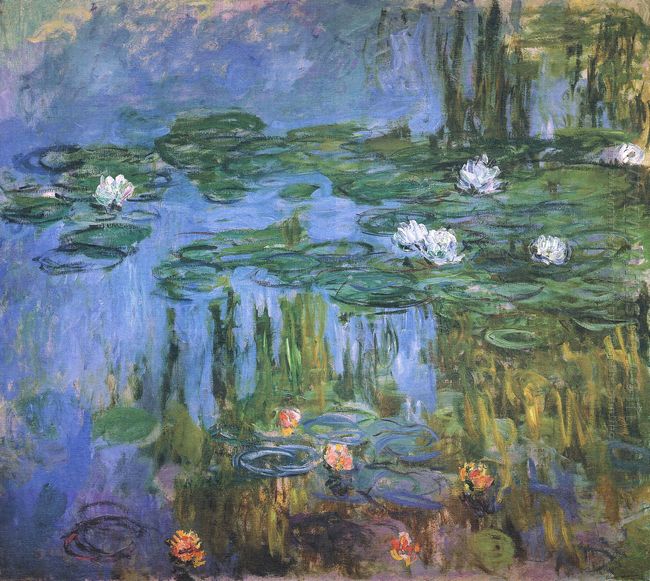
"Monet's early paintings can not be comparable to these incredible water scenery, which have kept spring on the canvases forever. The dreamlike water sometimes wear light blue and sometimes gold, reflecting the blue sky, lush pond shore and pastel water lilies. Quiet landscape and inner beauty make this work a music and a poetry." said a critic.

At first, the locals objected to this pond program because of the river argument. After several twists and turns, a Japanese-style bridge appeared above the pond, then the willows and flowers around the pond. Of course the paradise included the melody-water lilies, which accompanied Monet's for his last 27 years. In 1901, the government agreed to Monet's purchase of another land in south because of his local fame. But the devoted enthusiasm for painting made him reject the honor again and again. Since 1904, the Japanese-style bridge in the painting was gone, even the sky. There existed just pithy water lilies and pond corner with dark lake. And the public couldn't help applauding for the serial works when they met them in Paris.

Water Lilies is a series of several canvases of the pond by French Impressionist Claude Monet, who is the founder of Impressionism. During his last thirty years, the water garden, with a Japanese-style arched bridge , was the main subject of his oil paintings.

2013年7月5日星期五

The Beginning of Color Theories

Color theories create a logical structure for color. For example, if we have an assortment of fruits and vegetables, we can organize them by color and place them on a circle that shows the colors in relation to each other.

Joshua Reynolds (1723 to 1792) was a well known figure in the history of western painting, and the most famous classical painter in Britain and the founder and lifelong dean of the Royal College of Art. Meanwhile, he persistently insisted on the color theory of the Renaissance and actively practiced it. He made a lot of refinement and interpretation of Renaissance painting theory.


In the same period, another famous British classical painter Thomas Gainsborough (1727 to 1788) was an artist filled with the spirit of rebellion, who challenged traditional color theory by using his own works. In his "The Blue Boy" and "A Woman In Blue Portrait Of The Duchess Of Beaufort", blue and purple took the dominant position and cool colors were used in a large space.


Why We Said Leonardo Da Vinci Italian Renaissance Heroes

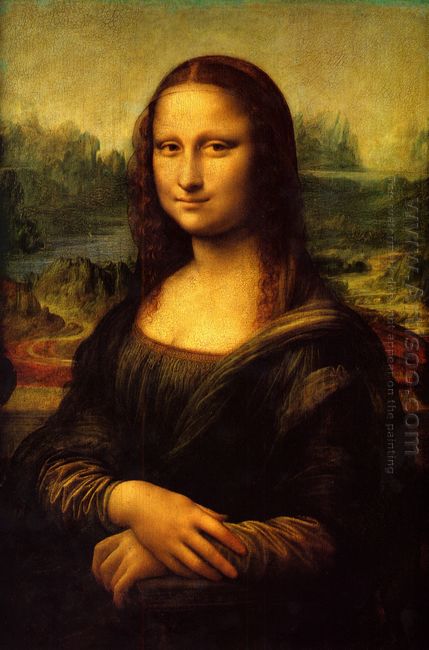
Leonardo Da Vinci was spending his whole life for scientific research and artistic practice, the "Mona Lisa" reflected the painter's observation of nature in a scientific thinking, which was the most prestigious portrait masterpiece in the history of western oil painting. In this painting, Mona Lisa looked very elegant and calm with a meaningful smile. The painter sought to demonstrate the richness of life and multifaceted personality psychology, and studied the smiles of facial muscles and psychological changes and reflections when relaxing from two aspects: anatomy and physiology. He depicted an ideal beauty in a specific character. The hands were portrayed delicate, rich and dynamic. Eyes, mouth and hands were ingeniously combined with soft shadows. The background was also treated properly with difference on the left and right perspective, making the whole picture more vivid.

There was less agreement among different people on the mysterious smile of Mona Lisa for 500 years. Harvard Medical School neurobiologist Margaret Livingstone explained in U.S.Science magazine, "The mysterious smile of Mona Lisa is less concerned with the painter's painting techniques, than it is related to the dislocation of the eyes. Her flickering smiles are resulting from our eyes movements combining with the reflection of light. If our attention were solely focused on her mouth, then we would never see her smile. Da Vinci made the use of vague outline in the mouth of Mona Lisa. This approach meant "evaporated like smoke" according to the original Italian literal meaning."


For more famous artworks gallery, you may want to have a visit:
Abstract Art
Chinese Painting

2013年7月2日星期二

Two Great Artists On Romanticism Painting

Romanticism is built on the basis of pursuit of liberty, equality, fraternity, and personal liberation with a strong focus on fantasy beauty, emotional communication and passionate disposition expression. Its subjects are mainly concerned with unique personalities, exotic ambience, life tragedy and unusual events. The romanticism pioneers are the French painter Shyleaco and French painter Delacroix who made the romanticism painting reached its peak.

Shyleaco (1781 to 1824) is a pioneer of the French romantic painting. Born in Lyon of France, Shyleaco came to study painting in Parisat the age of 15. Deeply influenced by the predecessors, he had created some romanticism works. Although his life was short, his lifetime was filled with passion, fantasy and pains, all of which were reflected in his works. He excelled at expressing peoples inner feelings in a realistic approach. All the subjects of his work were made from real life and had removed all nonessential things. Raft of Medusa was the most representative work of Shyleaco. It was based on the event of "Medusa" ocean-going vessels running against rocks, reflecting distressed seamen's great passion and desire to live at the moment of rescued boats after 13-day drift on a raft at sea.

Eugène Delacroix (1798 to 1863) was an important painter of the French Romantic painting. Born in a lawyer's family in Paris, he was enthusiastically fond of art and entered to Art Academy at the age of 18. During that time, he got acquainted with Shyleaco known as the pioneer of romanticism painting. As a consequence, his early works were much inspired by Shyleaco. His paintings were good at displaying the active scenes, bright color, bold and vigorous feelings. His major works are Dante and Virgil, massacre of Chia Island, freedom of leading the people. Delacroix was a great and influential painter in the history of western art and has made significant contribution to the development of romanticism painting.


Description on Baroque Style in Oil Painting

The term “baroque” allegedly came from the Portuguese word “baroco”, or the Spanish word “barreuco”, meaning random-shaped pearls. Later, this term was used to describe anything bizarre, exotic, and out of the mainstream. Quite naturally, from the very beginning, the term “baroque” had been treated with a negative sense and this trend lasted until the late 19th century, when the book the Renaissance and Baroque was published, which gave a comprehensive description of baroque style and made it a serious and independent artistic trend.

The baroque artists prefer to employ heavy color and their wildest imagination to create a romantic, exuberant and grandiose scene. Their focus shifts from the rationality to the freedom. 

Baroque that was primarily associated with the religious tensions within Western Christianity: division on Roman Catholicism and Protestantism. In response to the Protestant Reformation of the early sixteen century, the Roman Catholic Church had embarked in the 1550s on a program of renewal known as the Counter - Reformation. As part of the program, the Catholic Church used art of the magnificent display for the campaign. It was intended to be both doctrinally correct and visually and emotionally appealing so that it could influence the largest possible audience. But as the century progressed the style made inroads into the Protestant countries. Main representatives of this form of Baroque were Bernini and Rubens.


2013年6月6日星期四

Statement Of Oil Painting Artist

“I enjoy a sense of creative freedom when I paint. I am intrigued and enchanted by the moods, play of light and beauty of the scenes which captivate me and inspire my paintings. I feel thankful pleasure that my art is viewed and appreciated by others.”

Shrub Oak Custom Framing is pleased to announce “Captivated”…an exhibition of original artwork by Rose Stock in the DeWindt Gallery at Shrub Oak Custom Framing December 4, 2011 through January 13, 2012

Rose grew up amid the sights, sounds and excitement of New York City, but found herself drawn to the serenity and peace of the Hudson Valley. The natural beauty and wondrous light pervading the Hudson River amidst grand Hudson Valley views illuminate Rose's oil paintings artwork .

Diligent study, hard work and introspection have allowed Rose to bring to fruition the artistic passion she has known since childhood. Her initial training and production was in charcoal portraiture. Transitioning to oil painting, Rose treasures the freedom of expression she feels in generating landscapes oil paintings.